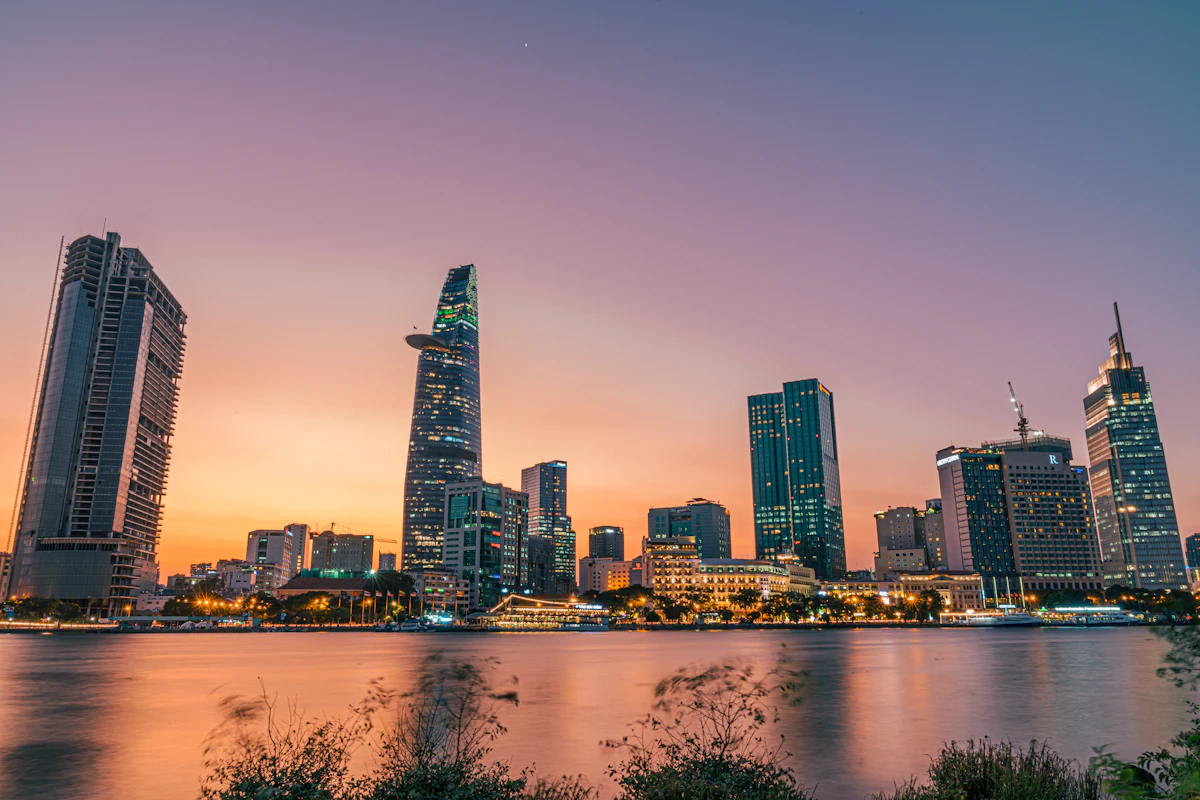
Few urban precincts in Southeast Asia have undergone a transformation as complete as South Jakarta's journey from planned suburban retreat to the most coveted residential address in the archipelago.
Ringkasan Bahasa Indonesia: Artikel ini merupakan konten editorial berbahasa Inggris yang membahas evolusi kawasan Jakarta Selatan dari kota taman menjadi alamat global paling prestisius. Untuk menikmati nuansa editorial sepenuhnya, kami sarankan membaca dalam bahasa Inggris.
To understand South Jakarta as it exists today — a constellation of tree-lined avenues, international schools, diplomatic compounds, and residential towers that rival the offerings of Singapore and Hong Kong — one must first understand what it was designed to become. The answer lies not in a single masterstroke but in a slow, deliberate accretion of decisions made across decades.
The story begins in the 1950s, when Kebayoran Baru was conceived as Jakarta's first planned satellite town — a "garden city" in the tradition of Ebenezer Howard's early 20th-century urban planning philosophy. The vision was radical for its time: a self-contained community with generous green space, wide boulevards, and residential blocks arranged around central parks. The planners could not have predicted what would follow. As Jakarta expanded southward, Kebayoran Baru's position — adjacent to the city's commercial spine but buffered by its own internal logic of parks and quiet streets — proved to be not merely pleasant but profoundly strategic.
The construction of Jalan Jenderal Sudirman as Jakarta's primary commercial artery established the corridor that would eventually become the SCBD (Sudirman Central Business District) — Southeast Asia's most concentrated financial precinct outside Singapore. The completion of the inner-city toll road network connected South Jakarta to Soekarno-Hatta International Airport in under an hour. Most recently, the opening of the MRT Jakarta North-South line brought rail-based mass transit to a neighborhood that had long been defined by road transport. Each infrastructure milestone signaled permanence.
Neighborhoods are not made by planners and engineers alone. They are made by the people who choose to live in them. The 1990s brought expatriate executives drawn by the combination of established housing stock, international schools, and easy access to the SCBD. The 2000s saw Indonesian professionals returning from abroad with global reference points. The 2010s brought regional investors and professionals from across ASEAN, for whom Jakarta represents a market of scale unavailable in the smaller city-states.
Perhaps the most remarkable aspect of South Jakarta's transformation is what has been preserved. Unlike many Asian cities where development has meant the systematic elimination of green space, South Jakarta retains significant pockets of mature vegetation. The tree canopies that shade Jalan Gunawarman and Jalan Kemang, the neighborhood parks of Kebayoran Baru, the golf courses that provide an unexpected lung of green in the heart of the city — these are not vestiges but active, valued, and fiercely protected components of the neighborhood's identity.
South Jakarta has entered a phase of its evolution where it no longer needs to announce itself. The international schools are here. The private hospitals are here. The embassies are here. The restaurants that matter are here. The address has accumulated, over decades, a density of institutional validation that no marketing budget can manufacture. For the buyer considering a residence at The Meridian, the neighborhood is the larger asset — the one that will continue to appreciate long after the paint has dried.
By the Editorial Desk
[SHOWCASE CONCEPT — EDITORIAL SAMPLE]